
America Needs a Digital Bill of Rights
Today, the United States faces a reality that should concern Americans across the political spectrum: we do not have a single comprehensive federal law that protects personal data, limits how companies track us, or meaningfully restrains government surveillance. In practice, this means corporations compile detailed profiles on nearly every American, data brokers sell our movements and habits to the highest bidder, and artificial intelligence systems make consequential decisions about jobs, housing, credit, health care, and even policing, all behind closed doors.
During my time in the tech industry, I saw firsthand how data collection became the dominant business model of the digital economy. Every click, every swipe, every location ping, and every face scan feeds systems designed to predict, influence, and monetize human behavior. Some companies try to act responsibly. Many do not. And without federal guardrails, there is little to stop corporations from tracking Americans indefinitely or selling their personal information to anyone willing to pay.
I spent years as an attorney working inside the legal system, defending people who depended on it to be fair. Later, I spent years as a senior leader at Microsoft and Google, helping build and manage the digital systems that now shape our economy and daily lives. Those two experiences, law and technology, gave me a vantage point few Americans have. I have seen how technology can empower families, expand opportunity, and connect rural communities like ours in TX-33 to the wider world. I have also seen how the same tools can quietly strip people of privacy, dignity, and control, often without their knowledge or consent.
I am running for Congress in Texas’s 33rd District because communities like ours are already living with the consequences of this digital free-for-all. Our district is often portrayed as disconnected from the tech economy, but that could not be further from the truth. Our farmers rely on data-driven equipment. Our small businesses depend on online platforms to reach customers. Our families use smartphones as banks, classrooms, workplaces, and lifelines. Yet the people who rely most heavily on these tools often have the least protection from how their data is collected, used, and weaponized.
A Digital Bill of Rights is a necessity for places like TX-33.
The problem extends well beyond corporate misuse. Government agencies at every level increasingly deploy predictive algorithms, automated decision tools, and biometric databases. These systems are often sold as neutral and efficient, but they frequently replicate old biases in new digital forms. They make mistakes. They deny people explanations. And they disproportionately burden working-class communities, rural Americans, and communities of color.
As a lawyer, I understand the dangers of decisions made without transparency or accountability. As a former tech executive, I understand how these systems are designed and where they fail. And as someone seeking to represent TX-33, I know our district deserves protections that reflect both our values and our constitutional traditions.
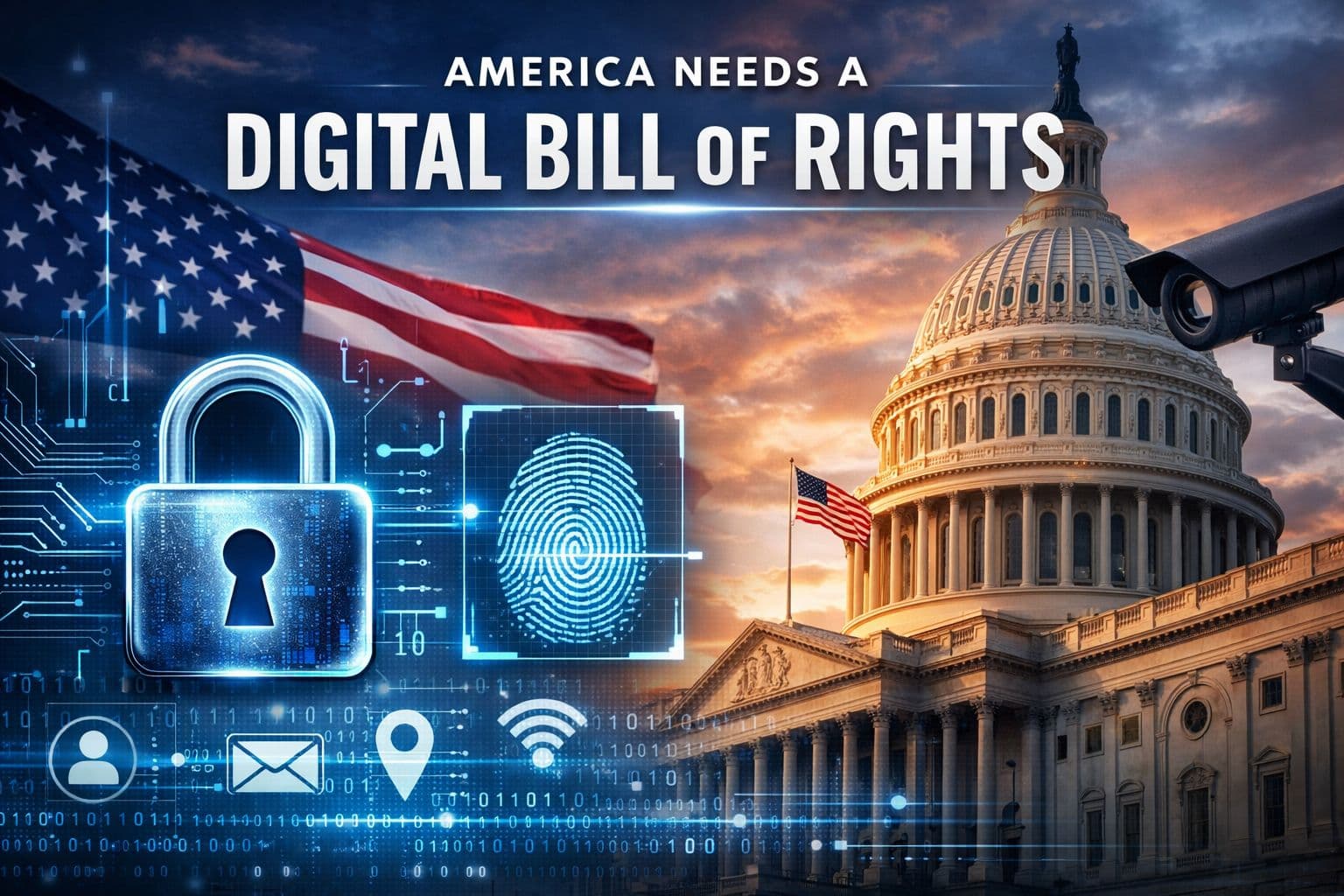
A Digital Bill of Rights would establish those protections. It would limit data collection to what is genuinely necessary for a service to function, give Americans ownership of their personal information, require transparency when artificial intelligence is used to make decisions that affect people’s lives, place strict limits on biometric surveillance, and hold corporations and government agencies accountable when they fail.
Americans often assume these rights are radical. They are not. Europeans have enjoyed them for years. Here at home, we have been told to accept surveillance as the price of convenience and security.
Some politicians avoid confronting Big Tech because Big Tech funds their campaigns. Others resist limits on surveillance because they believe constant monitoring makes us safer. History tells us otherwise.
Digital rights are civil rights. They determine who gets an opportunity, who is watched, and who is left vulnerable to manipulation and control.
The race in Texas’s 33rd District features candidates (Colin Allred and Julie Johnson) backed by corporate PACs and Washington insiders who benefit from the status quo. I am NOT one of them. I am running because our communities deserve a representative who understands both the promise and the peril of modern technology, and who is willing to put people ahead of unchecked power.